


|
|
We have asked Arian Borgers, Investment Manager at Philips Pensioenfonds why the data of the Sustainable Development Investment - Asset Owner Platform (SDI AOP) is important to his organization and how they are using the data.
|

What prompted you to acquire and employ the SDI AOP data for a specific use?
We have two sponsor companies, Royal Philips and Signify. They both have a very strong Responsible Investment policy with links to the Sustainable Development Goals. These goals are also recognizable for our beneficiaries. We have set up a new Responsible Investment benchmark to have 20%-points more invested in companies that contribute with their revenues to the SDGs we selected (an increase from 15% to 35%, see below). To qualify, the contributions should be at least 10% of total revenues. This must also be measurable. The measurability is hard-wired because the data we use to classify investments is based on the transparent and granular framework of the SDI AOP, and we can observe the data sources in the dataset. This contributed a lot to our choice for this data.
Percentage invested in companies that contribute to our selection of the SDGs (green colour), market cap weighted benchmark (left) vs. Custom SDG benchmark (right). 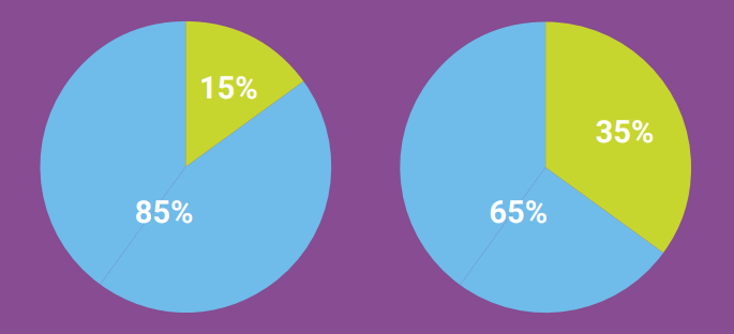
How does the SDI AOP data differ from other sources out there?
When you look in the SDI AOP data set, it is not a black box. You can find the exact links to the public reports used to determine how much of the revenues of a company is linked to a specific SDG. In other words, you can find information on why a company has 24% revenues coming from SDG X. That is a very strong point of the dataset. We want to be able to verify where the data used for the execution of our sustainable investment policy comes from. The SDI AOP data set allows us to do just that.
Transparent process to select SDI’s To what extent do you use the SDI AOP dataset?
We tilt our entire developed markets equity book of about €4.5 bn. towards SDIs based on the data provided by the SDI AOP. Going forward we will investigate for other asset classes how to invest more in companies that contribute to our selection of SDGs.
Which teams in the organization use the data. Is it primarily RI, Portfolio Managers or Strategists using the data?
To be as flexible as possible, we have chosen for an outsourcing model. The fund itself employs a limited number of people mainly responsible for strategy and overseeing the many outsourcing partners we have. In this case Qontigo uses the data in the construction of the benchmark and the reporting on the benchmark characteristics. BlackRock is also involved, they manage our developed equities mandate vs. the customized index and they monitor the SDG profile of the portfolio using the SDI AOP data. Before implementation, BlackRock was also involved in the selection and the design of the benchmark.
How is the data being exploited and what are the results?
For our equity book we invest passively. When we began building our new Responsible Investment Index, our starting point was a market cap benchmark which we wanted to tilt towards “greener” investments. Together with BlackRock and Qontigo we built our new benchmark based on the SDI AOP dataset. As indicated, this process began with the market-cap weighted benchmark. We then took out our exclusions. Then we optimised: we used an algorithm from Qontigo that makes sure that you get exposure to revenues that are linked to the four SDGs you have selected, so on average companies with such revenues get a higher weight. However, there are limits we impose for risk management purposes. We want to avoid tilting too heavily towards one specific industry or sector just because it fits our SDG requirements. You must take this into account when constructing an index. You also want to limit portfolio turnover because costs are obviously very important. You also should consider a minimum threshold for the SDG exposure of an investment because otherwise you are vulnerable to greenwashing accusations. The result of this exercise is our SDG benchmark.
To whom do you report about the SDIs and how?
We report to our stakeholders about the SDIs. We have started communicating on the overall improvements of the portfolio and some examples for clarification. The main target audience are our beneficiaries. They support the SDG’s we have chosen, expect us to invest more in sustainable companies and want to understand how we do that. In doing so we want to contribute to the trust that our beneficiaries have in Philips Pensioenfonds for investing their pension contributions in a sustainable way.
What are your objectives with SDI?
Our main objective is to fulfil our participants' expectations that we invest a larger share of their money in sustainable companies. Our sustainable development investments focus specifically on four SDGs: 3, 11 12 and 13. These are Good Health and Well-being, Sustainable Cities and Communities, Responsible Consumption and Production and Climate Action, respectively. When implementing our SDG policy for our equity investments we established the SDG benchmark. This resulted in, among other things, the fact that we have 20%-points more invested in companies that contribute with their revenues to the SDGs we selected (an increase from 15% to 35%). To qualify, the contributions should be at least 10% of total revenues. This supports our goal to invest more in companies which measurably contribute to our four selected SDGs: the SDI AOP data facilitates that goal.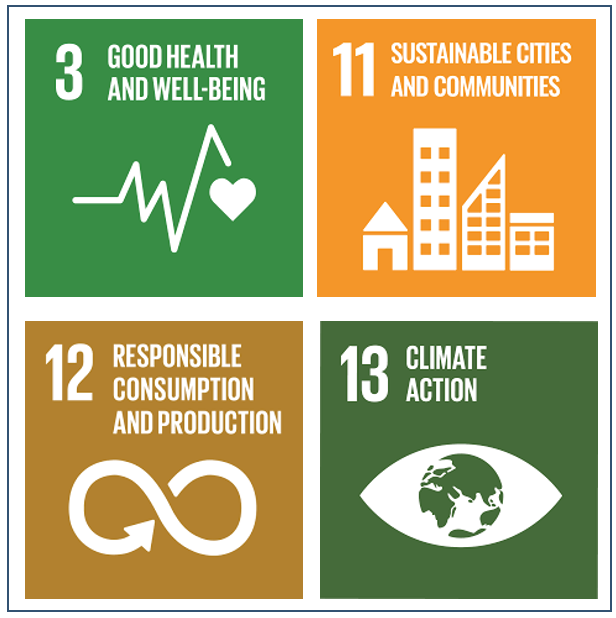
What were the benefits which you achieved through using the SDI AOP data?
We ended up with a benchmark which is much “greener”, with a better SDG profile, and also a 30% lower CO2 intensity based on revenues. This, we believe, really fits with the outcome of our participant survey: it's still a broadly invested portfolio, but it is invested more in sustainable companies.
Interested in more SDI AOP use cases? Click here.