


3rd SDI AOP seminar hosted by PGGM
Piet Klop, Head of Responsible Investing at PGGM opened the 3rd SDI AOP Dutch seminar in Zeist. With over 60 people from the investment community joining it was a lively event.
State of the impact investing Industry - Wouter Koelewijn
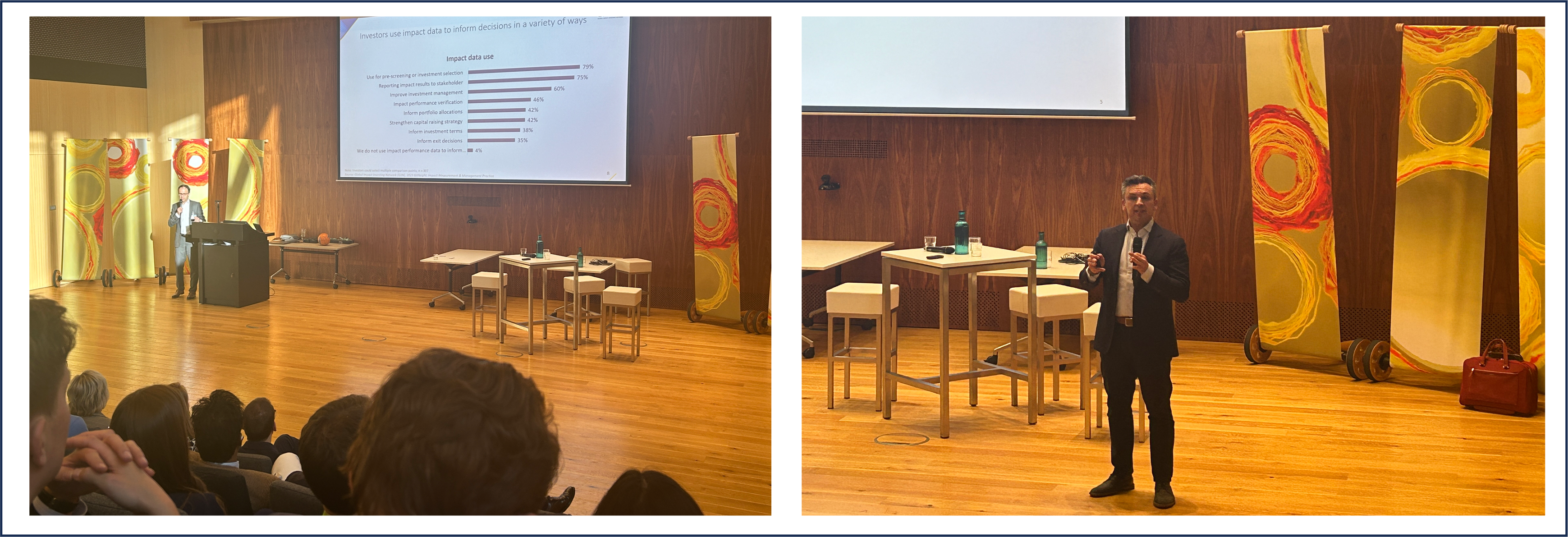
The meeting kicked off with a presentation by Wouter Koelewijn who is Senior Advisor at the Global Impact Investing Network (GIIN).
Wouter Koelewijn highlighted the key elements of impact investing, which – as he points out – is different from impact aligned investing. Four practices define impact investing: it is characterised by:
- Intentionality;
- Use of evidence and impact data in investment design;
- Managed impact of performance ;
- Contribution to the growth of relevant industries.
Over 100 GIIN members participated in research resulting in a research paper on the Characteristics of Impact Investing and how to apply these to Listed Equities. Wouter gave a brief overview of the key take-aways of this research:
- 75% of the impact investors seek market-rate returns on a risk-adjusted basis.
- Pension funds, family offices and development finance institutions are the key sources of capital.
- Favourite investment sectors are food & agriculture (61%)m energy (54%) and healthcare (50%).
- Investors use impact data to inform decisions in a variety of ways for example for pre-screening or investment selection, reporting impact results to stakeholder, improve investment strategy.
Asset owners’ approach to impact investing is diverse: there’s no pattern or standard approach.
Wouter Koelewijn: “We can talk about measurement, but the foundation is setting goals. Collecting data is an important first step for building an impact practice and setting quantifiable targets. The SDI AOP can be a great tool for asset owners to start steering on impact”.
Relevant developments in AI - Machiel Westerdijk
In the following session Machiel Westerdijk, Managing Director at Entis (the data and software technology partner of SDI AOP ) elaborated on the opportunities and risks involved with the application of AI in Asset Management. Entis uses structured and unstructured data to extract data to inform the SDI Taxonomy and rules. Artificial intelligence and machine learning, combined with human validation, provide scale and continuous improvement to the SDI dataset which allows SDI AOP to grow the coverage.
Machiel Westerdijk: ”The major trends in asset management are the transition from the use of active to passive instruments, leveraging alternative data for deeper insights on alpha, a demand on thematic information with a focus on sustainability and technology themes. This in combination with regulatory pressure is pushing for AI adoption”.
AI in sustainable investing is enhancing decision-making, as automated data generation is deepening insights. AI can be used for automated document interpretation like annual reports, analysts' reports, and news. Besides being widely applicable, AI can cover larger investment universes faster and deeper by transforming stories and explanations into classifications and scores. Also, linking sustainability taxonomies and rule systems (EU taxonomy, SDI taxonomy, PAI, SFDR, SI) to text documents is an added value of using AI technology.
The ongoing AI revolution is surpassing the expectations of experts in terms of speed. Intelligence is evolving into a utility, and AI is enabling new capabilities not just replacing human work. Machiel points out that there is a need to control AI risk because of fake information, super intelligent algorithms taking control and super intelligent cybercrime. These are risks that need to be managed, weighing these potential negatives against the emerging capabilities. Furthermore, while it is evolving quickly, AI is not yet flawless. As an example, GPT4 is a very promising tool in AI, but it struggles with lengthy documents, and it has weak contextual awareness, using external information beyond provided text to place it into context (which obviously may be wrong). We also see calculation errors and issues with data extraction from tables and pictures which makes fully automated, accurate data retrieval from complex sources difficult. Therefore, the AI should not be left unchecked in carrying out tasks.
Machiel closes his talk with an overview of current innovations at Entis which cover advanced revenue classification, taxonomy linking, multi-model AI research, emerging technology prediction and AI for outcomes detection.
SDI AOP Product Development - James Leaton
The SDI AOP brings together these two very different worlds of impact and AI to identify sustainable opportunities. “We are not afraid of AI. It’s really about using AI to ask the right questions and get the right answers we are looking for and we still have humans involved”. That’s how James Leaton SDI AOP Research Director opened his presentation at the PGGM event. He continued by explaining the added value of joining the SDI AOP. Partly, it's the community: discussing challenges, experiencing the joy and pain of for example implementing various regulations. But also, the credibility of the platform that is asset owners driven with a methodology and standards ensuring they are fit for purpose. And last but not least transparency. Providing usable data, explaining how we obtain it and the logic behind it. It's not just a magic formula. James Leaton gave a review of what SDI AOP has been doing and what’s being developed.

The touch stone is the SDI Taxonomy which focuses on products & services that can be applied across our solutions – whether that be revenues, patents, outcomes or other asset classes such as private markets. The most established dataset on revenues has already seen outperformance in terms of revenue growth since 2020. This shows that the themes investors have been selecting like climate/energy, health, food & water – our basic needs – are successful.
SDI AOP continues to develop in four directions. Firstly, we iterate the SDI taxonomy, using research from asset owners and other users to inform our approach. To continue the transparency, this is not always successful in identifying a comprehensive reliable dataset; western commercial banks are an area that has proved very difficult for example. Functionality has improved with Entis now able to deliver the data with quarterly updates to add the latest market constituents. Meanwhile thematic tagging helps users think about the breadth of climate solutions across sectors and SDGs. And the user guidance is a way of helping people think about how they can use our data in different ways, learning from peers. Coverage has expanded with the fixed income extended to emerging markets, and the first real estate rules applied.
Innovation is also central to what we do, being like a start-up, but with the backing of large asset owners. We continue to respond to market feedback, producing historical data around the SDI Outlook patent data for quant teams for example. We also looked at CAPEX data but found this is not at a mature enough stage to get a globally consistent breakdown of expenditure, despite recent disclosure requirements in Europe. Finally, we know several people are interested in private markets which is the next topic on the program. Hopefully our SDI community can see how they have contributed to shaping the credible methodologies, and transparent datasets we’ve mentioned today.
Private Markets
Because private markets are an important proportion of the asset allocation the SDI AOP sees a lot of interest, from current subscribers, other asset owners as well as asset managers to provide coverage that includes private markets investments. The potential contributions to SDGs of private market assets are high, judging by the information that institutions are publishing. Furthermore, the intentionality of targeting positive outcomes, as alluded to by Wouter Koelewijn, is arguably easier to demonstrate for private market investments than for public market investments.
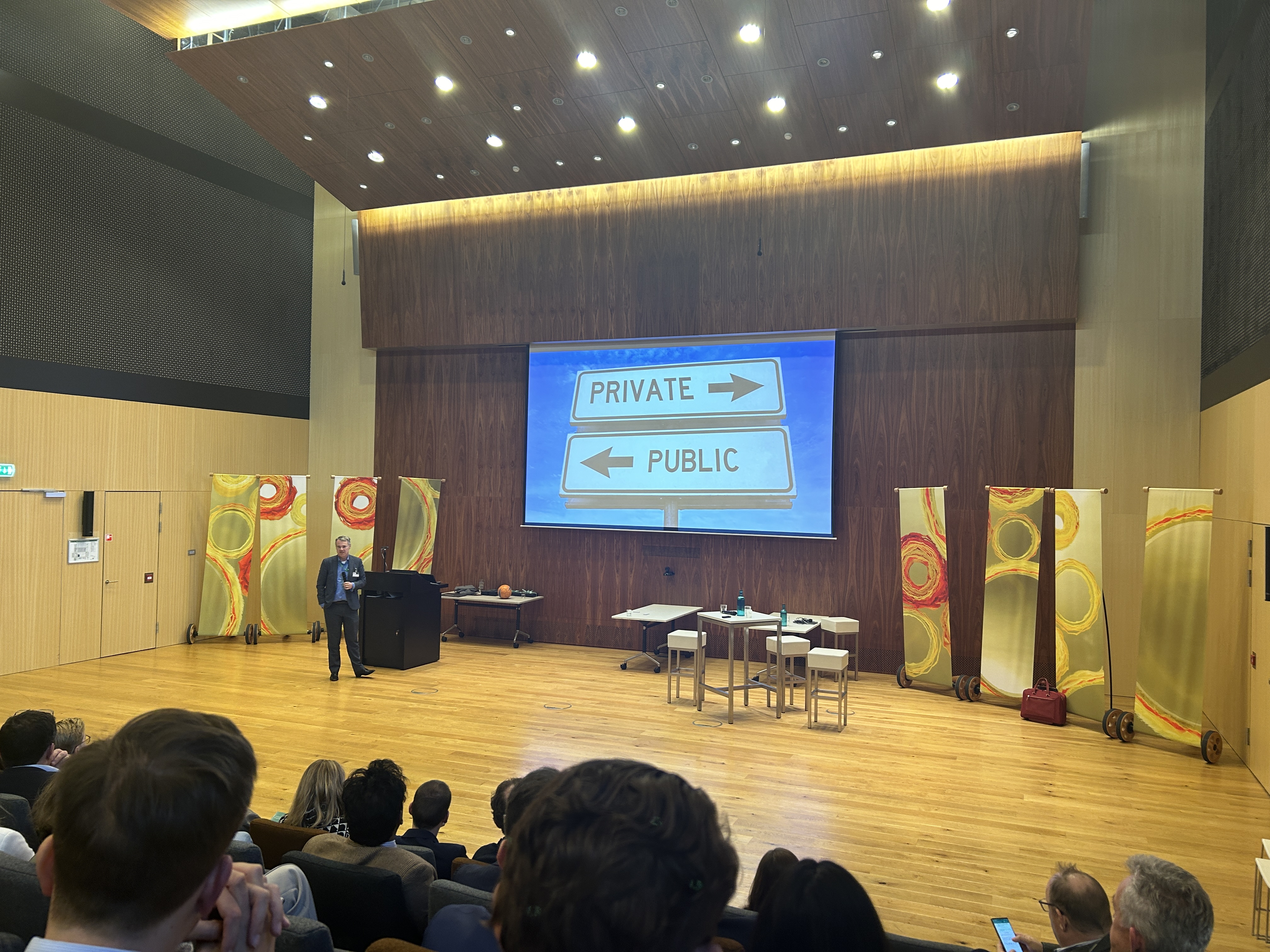
Hans op ‘t Veld, chair of SDI AOP’s Members & Markets Committee and Principal Director Sustainable Investments at PGGM) explains that expansion into private market is a natural step for the SDI AOP. The key challenge, however, is that data ingestion cannot be carried out in the same fashion as is the case for public market assets. Confidentiality issues and the availability of source information is different. A robust framework is needed in the absence of public data to inform the classification.

The SDI AOP wants to help the process of standardisation and is launching a templating structure. The template make it possible to lookup entities that have been pre-classified by SDI AOP and allows users to provide their own information on an investment structure. Hans adds the disclaimer that the SDI AOP cannot resolve all issues immediately, but a big step forward can be set with measuring private markets investments.The guidance will improve consistency, but proprietary data requires self-classification with good governance.
SDI AOP plans to offer a membership subscription to parties wishing to signup for the SDI AOP Private Market framework, which is aimed at:
- Consistent identification of product/service contributions
- Provision of guidance and conventions (where needed) to support classification
- Tooling to facilitate classification
- Providing a forum to discuss and share elements requiring refinement
- Becoming a database for structures that do have data disclosed
Currently beta-testing is taking place; the launch is expected this quarter.
Open dialogue on SDG’s uses cases and future focus from existing subscribers
In the last session of the program Hans op ‘t Veld moderated an active discussion between the audience and panelist Claudia Kruse (Managing Director Global Responsible Investment & Governance, APG Asset Management), Stephanie Kelly, Head of Greenwheel (the sustainable thematic research team of Redwheel based in London) and Narina Mnatsakanian (Head of Impact Investing, UBS Asset Management). Panelists briefly introduced themselves and the organisations they represent. Between the three investors, € 2 tn. is being managed, which means that the three organisations have an important say on the direction of the industry and indeed are leaders when it comes to sustainable investment.
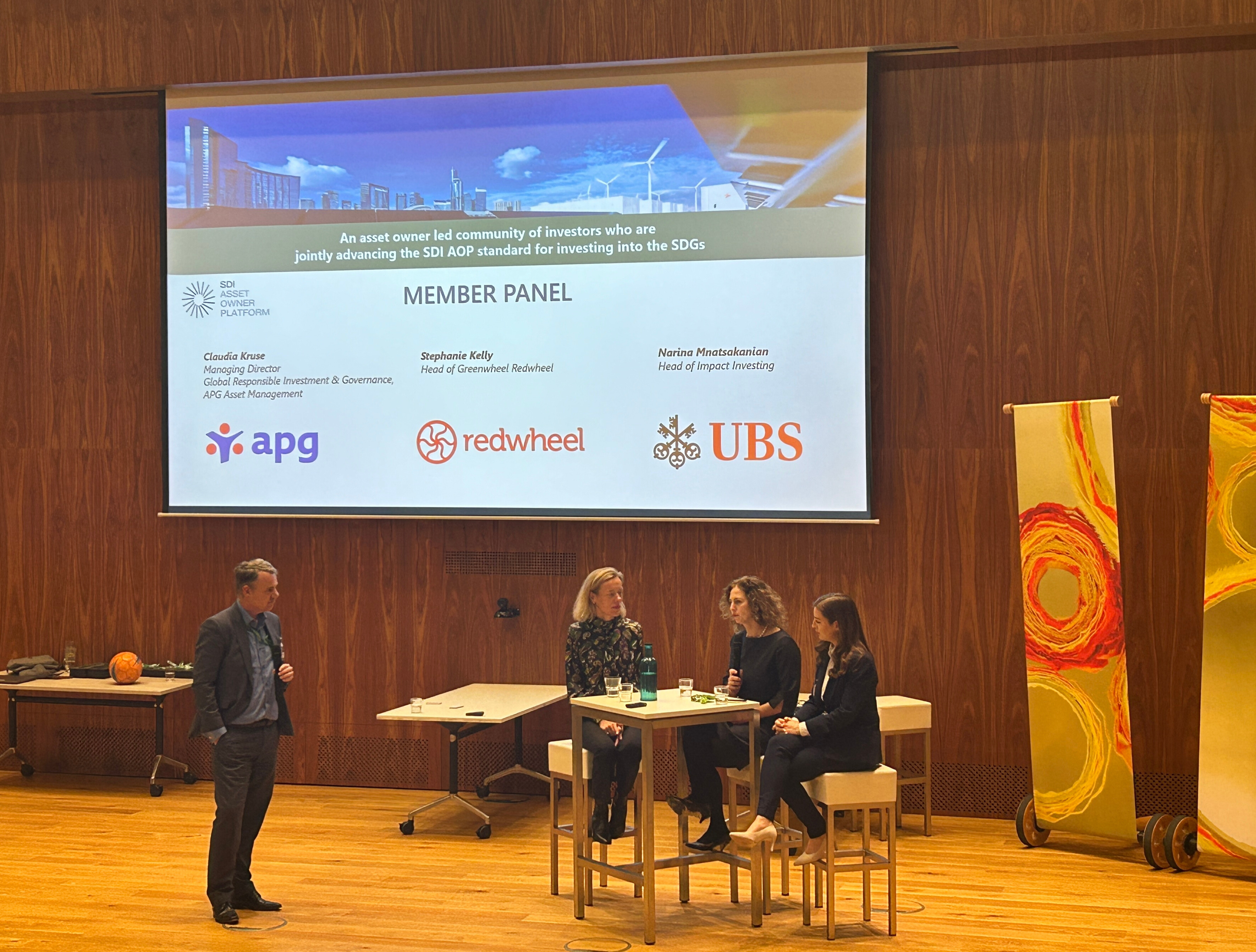
Hans op 't Veld kicked off the conversation by asking the panelists whether it to them is of relevance that the SDI AOP is an asset owner led platform.
Stephanie Kelly explains that Redwheel has chosen for the SDI AOP for its transparency, rigor and the community that comes with the membership. The community makes it possible influencing the methodology and working together on specific themes, highlighting the collaborative nature of the work that is being done. The asset owner backing gave Redwheel additional comfort that it would be fit for purpose, recognizable and could work with all their clients through the use the same language and the same data.
Narina Mnatsakanian added that one of the important reasons for UBS Asset Management using the SDI AOP data is that it’s aligned with their client’s needs, it indeed is rigorous and has a high confidential level. UBS AM has other data sets in house that they use for funds, but SDI AOP data and the fact that it, through its system is more linked to the sustainable development investing mindset, looking to move to output and outcomes in the real world is very important.
Claudia Kruse points out that it's attractive that the SDI AOP keeps innovating. New types of products / approaches and product developments are in response to what the market requires and as such the data continues to become ever more versatile. The SDI AOP subscribers have triggered innovation, for example on private markets which were discussed earlier in the session. Another interesting aspect is the broad range of use cases. There obviously is a SDI classification, but underneath is a treasure trove of granular underlying data. The data allows you to dig deeper into products and services, but also provides e.g. thematic tagging on biodiversity and climate.
The panelists concluded that the usefulness of the service is independent on where in the world you are. The SDI AOP data gives investors the opportunity to speak the same SDI language that everybody can understand irrespective of geography.
As much as the Dutch seminar has become a tradition, it has also become a tradition to ask the panel and the audience what is on their wish list for the SDI AOP to work on in the year to come. After opening the panel to the audience, the panelists were asked to weigh in on this question. Stephanie alluded to the importance of the community of the SDI AOP: “Not just using the data but also have a collaborative community discussing themes and overlapping issues for example on human rights and biodiversity”.
Narina added to the wish list by looking at the innovation agenda, which has some exciting projects in the pipeline: “Working closely with SDI AOP on the outcomes project and to come to a dataset that we can use”.
Claudia highlighted the importance of both the continued investment of resources into existing information provided alongside an ambitious innovation agenda: “It’s not only about the change but also about the run. Keep on going with the same energy in investing and updating in the SDI Taxonomy, broadening the coverage of the SDI Innovation Outlook, launching the Private Markets, and working on the output/outcomes project”.
Hans op ‘t Veld closed the program of the afternoon by thanking the speakers, which were handed a small present, and the participants for their active participation. Participants were invited for drinks afterwards and the dialogue continued in an informal setting.